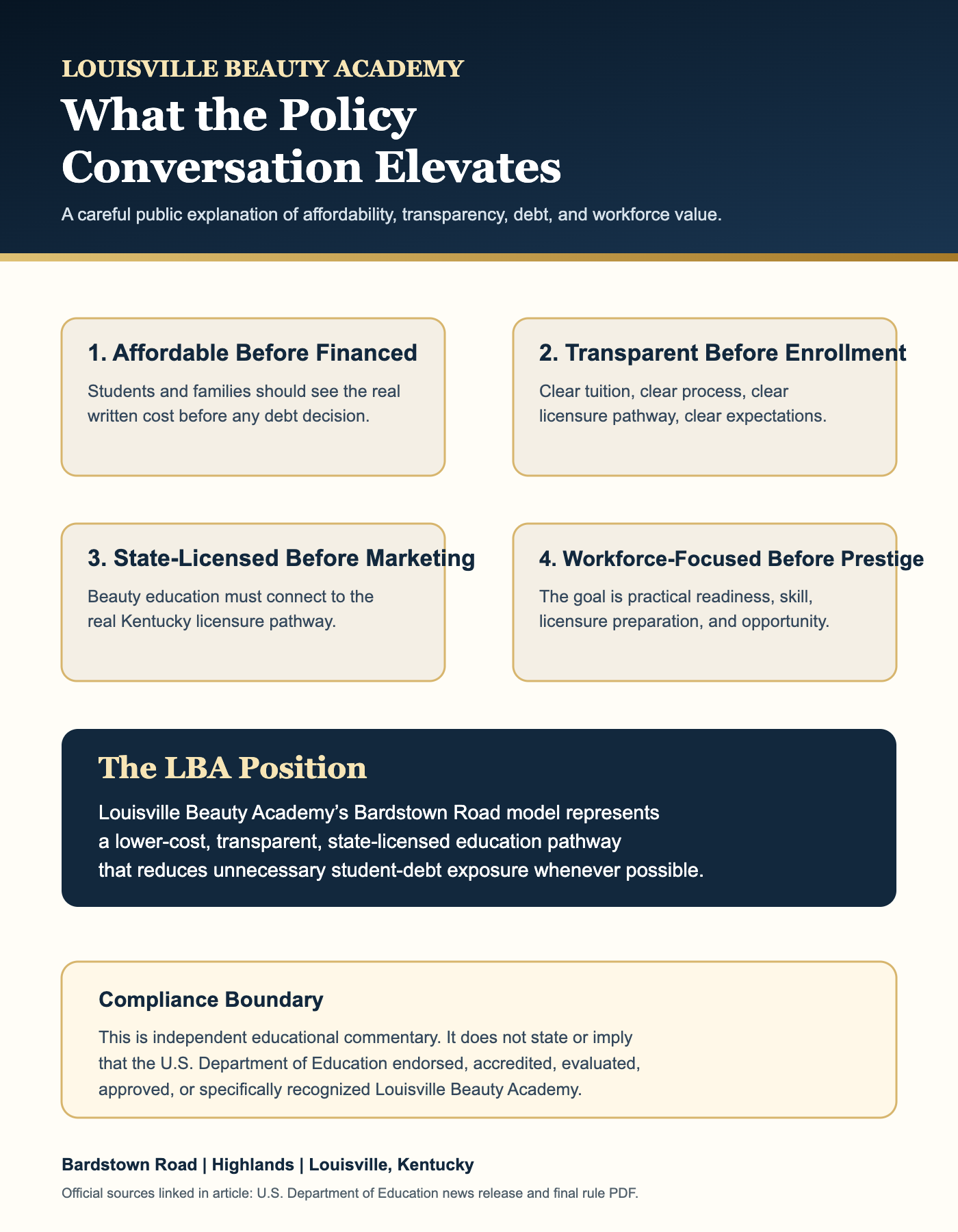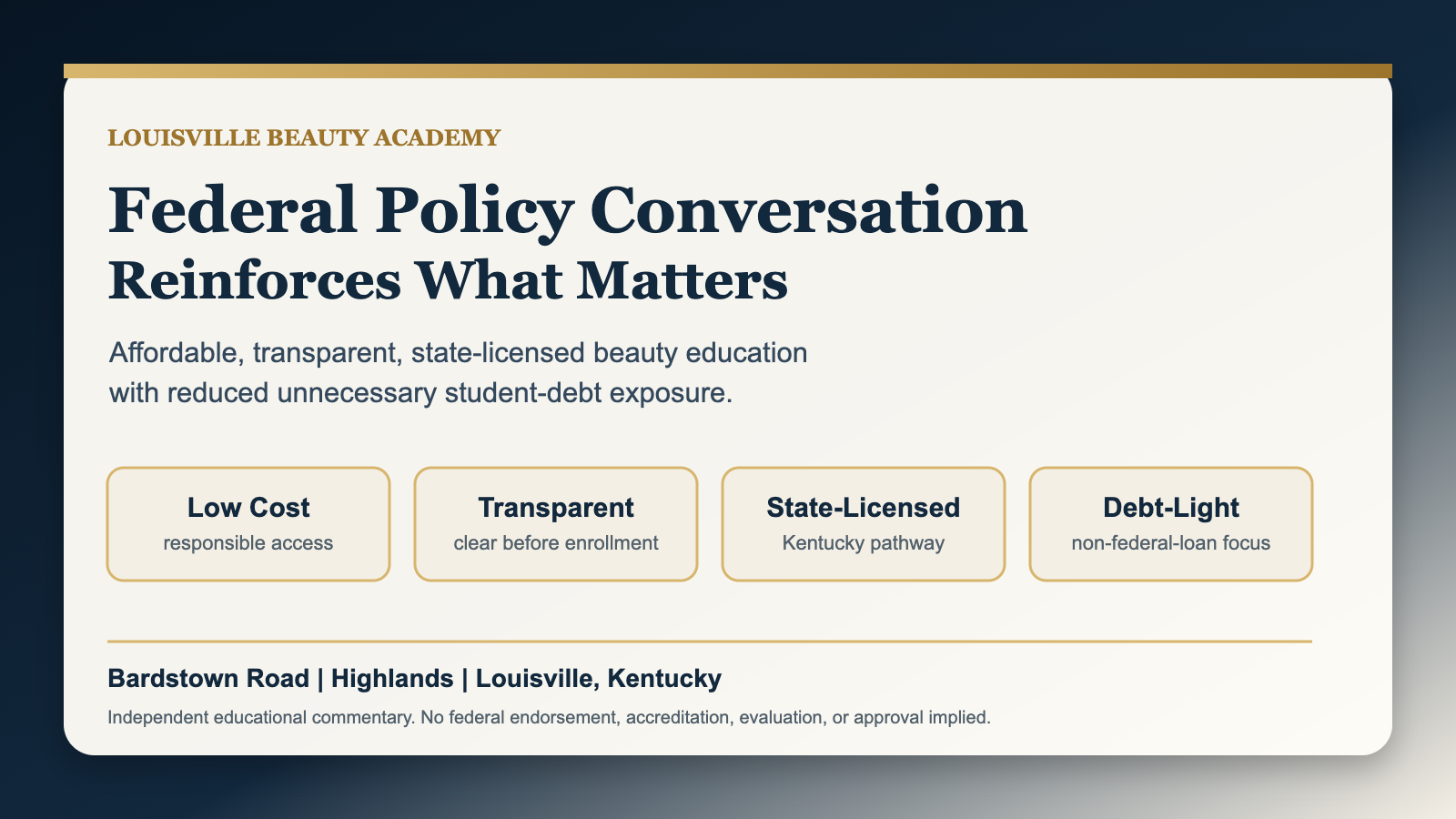
The U.S. Department of Education’s June 29, 2026 final rule on earnings accountability adds momentum to a national conversation about student debt, transparency, workforce outcomes, and responsible educational value.
For workforce technology and implementation-focused education, this conversation matters because students need more than branding. They need clear information, practical pathways, measurable expectations, and systems that reduce confusion before enrollment.
Louisville Beauty Academy’s published perspective offers a concrete local example of how a state-licensed, lower-cost, non-federally dependent education model can participate in this broader policy discussion. The article does not claim that the U.S. Department of Education endorsed, approved, evaluated, accredited, or specifically recognized LBA.
The stronger point is operational: educational value should be understood through cost clarity, transparent communication, licensure preparation, workforce alignment, and long-term financial responsibility. Technology can support those goals when it makes information, records, processes, and student pathways easier to understand.
Louisville Institute of Technology shares this as part of its broader workforce-technology lens: the future of education will require human-centered systems that make compliance, affordability, documentation, and student decision-making more transparent.
Read the full Louisville Beauty Academy article: Federal Policy Conversation Highlights the Growing Importance of Affordable, Transparent Beauty Education.
Important note: This post is independent workforce-technology commentary. It does not state or imply U.S. Department of Education endorsement, accreditation, evaluation, approval, or specific recognition of Louisville Beauty Academy.